
2026-01-05 00:00:00 Presiden Donald Trump yang semakin berani menyatakan pada Minggu malam bahwa AS “bertanggung jawab” atas Venezuela setelah menahan Presiden Nicolas Maduro dalam serangan militer akhir pekan lalu, dan ia mengeluarkan peringatan keras kepada negara-negara lain bahwa mereka mungkin menjadi sasaran berikutnya.
South America Donald Trump Oil & gas See all topics Facebook Tweet Email Link Link Copied!
Follow An emboldened President Donald Trump declared Sunday night that the US is âin chargeâ of Venezuela after detaining President Nicolas Maduro in a military raid over the weekend, as he issued stark warnings to other countries that they could be next.
Maduro, who was dragged into custody with his wife, Cilia Flores, in a deadly early Saturday morning raid, is slated to appear in court for the first time at noon ET in New York City to face charges that he and his associates conspired with with narcoterrorists to ship thousands of tons of cocaine to the US.
Trumpâs latest comments come even as some in his administration, like Secretary of State Marco Rubio, suggested the US would be relying more on leverage over Venezuela and coercion, rather than directly running it as Trump first suggested during a Saturday morning news conference.
Meanwhile, Venezuelans are hunkering down as they wait for more information about what the Trump administration has in store for their country.
The Trump administration is working quickly to establish a compliant interim government, according to US officials, prioritizing administrative stability and repairing the countryâs oil infrastructure over an immediate turn to democracy.
In particular, US officials have focused on the countryâs vice president, Delcy RodrÃguez, who Trump advisers identified weeks ago as a viable, if nonpermanent, alternative to Maduro.
Despite RodrÃguezâs initial attacks on the administration over Maduroâs capture, US officials privately maintained optimism she would work with the United States.
By Sunday night, RodrÃguez was striking a softer tone than she previously had, calling for âcooperationâ with the US.
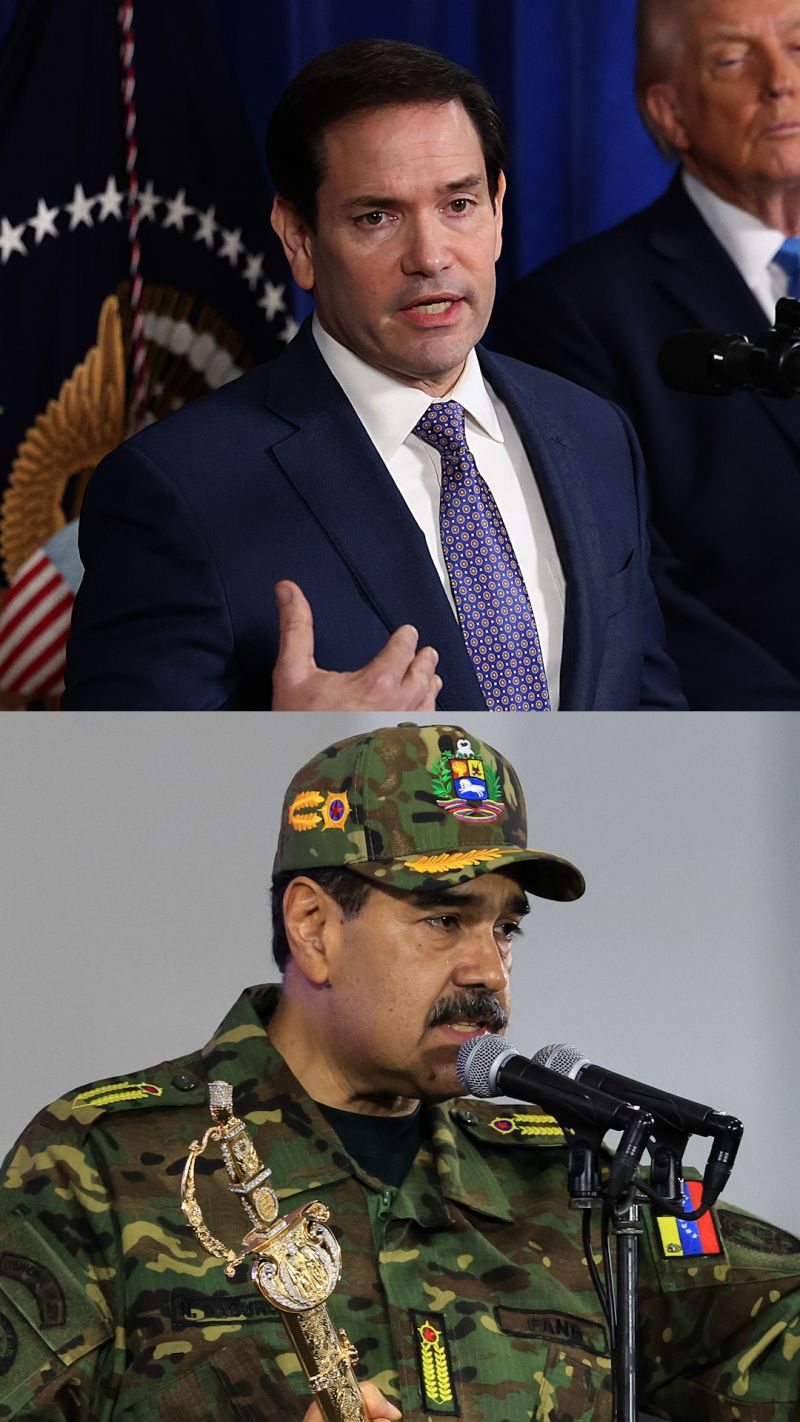
US Secretary of State Marco Rubio speaks during a press conference as President Donald Trump listens at Mar-a-Lago club on January 03, 2026, in Palm Beach, Florida.
Joe Raedle/Getty Images Trump returned to Washington, DC, late Sunday night where lawmakers are mostly divided along party lines in their reaction to the military operation, which Congress was not notified about ahead of time.
Democrats in Congress have slammed the administration for not seeking congressional authorization before the attack, while Trump allies in the GOP have mostly praised the operation.
Senate Intelligence Committee Chairman Tom Cotton, a Republican, told Berita on âState of the Unionâ that new âlegitimateâ elections including members of the countryâs opposition party will likely be a next step.
Hereâs what to know: What happened during the military operation?
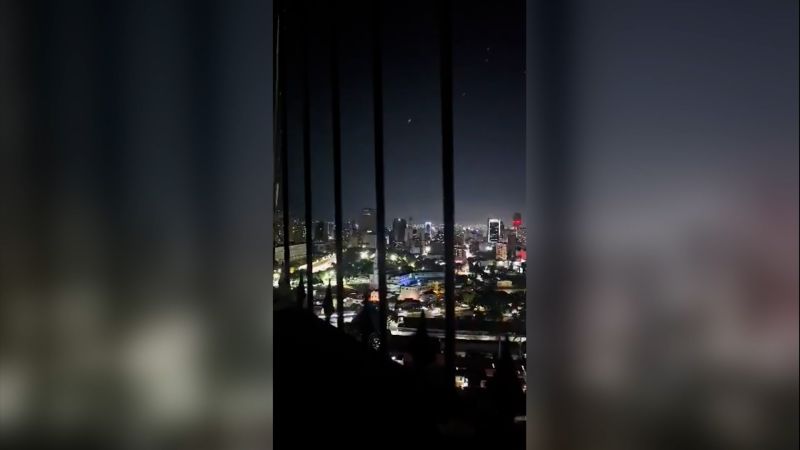
The Trump administration struck various parts of Caracas, Venezuelaâs capital city, in the early hours of Saturday, January 3.
Members of the US Armyâs elite Delta Force dragged Maduro and Flores from their bedroom and flew them to the USS Iwo Jima, then onto New York, via Guantanamo Bay.
The operation took months of planning and was the culmination of a pressure campaign on Maduro that has featured a massive US naval buildup in the Caribbean and a blockade of sanctioned oil tankers.
Trumpâs pressure campaign on Maduro has included strikes destroying more than 30 boats in the Caribbean Sea and eastern Pacific Ocean in what the US has described as a counter-narcotics campaign.
Trump last month ordered a blockade of sanctioned oil tankers coming to and leaving Venezuela, and the US has seized multiple vessels since the announcement.
This photo posted by US President Donald Trump to the social platform Truth Social appears to show operations for the Venezuela strike.
From President Donald Trump/Truth Social What is up with Venezuelaâs oil?
Rubio rejected accusations on Sunday that the operation was conducted in order to give US companies better access to Venezuelaâs oil reserves, which are the largest proven in the world.
Still, he predicted there will be âdramatic interestâ from Western oil companies on ABCâs âThis Week.â Berita reported Sunday, however, that energy companies have been privately wary of committing to the endeavor, according to multiple sources familiar with the conversations.
Experts and members of Venezuelaâs opposition say that the oil industry cannot be revitalized without political stability.
Venezuelaâs reserves consist of heavy, sour crude oil, which requires special equipment and a high level of technical prowess to produce.
Products made in the refining process include diesel, asphalt and fuels for factories and other heavy equipment.
Venezuelan state-owned oil and natural gas company PDVSA says its pipelines havenât been updated in 50 years, and the cost to update the infrastructure to return to peak production levels would cost $58 billion.
In recent weeks, members of the Venezuela opposition briefed Trump administration officials on their plans to revitalize the oil sector in Venezuela in the event of Maduroâs ouster, according to two sources familiar with the interaction.
But now, opposition members are wary of what the Trump administration is planning because they do not want remaining members of the Maduro regime to lead the country or any efforts to rebuild the countryâs oil industry.
Who is in charge in Venezuela?
Trump said during a news conference after the operation that the US would ârunâ the country âuntil such time as we can do a safe, proper and judicious transition.â Later Sunday, Rubio appeared to clarify those comments, saying that the administrationâs focus is on setting future policy.
âItâs running policy,â he told NBCâs âMeet the Press,â adding that the âentire national security apparatusâ will be involved in those decisions.
RodrÃguez, a Maduro loyalist, assumed the powers and duties of acting president on Sunday.
While RodrÃguez initially slammed the operation and demanded the US release Maduro and his wife, she later extended an invitation to the US government to collaborate on an âagenda of cooperation.â âPresident Donald Trump: our peoples and our region deserve peace and dialogue, not war.
This has always been President Nicolás Maduroâs message, and it is a message of all Venezuela right now,â RodrÃguez said in comments made directly to the US president.
Venezuelan Vice President and Oil Minister Delcy Rodriguez gives a press conference at the Miraflores presidential palace in Caracas, Venezuela, on March 10, 2025.
Ariana Cubillos/AP The Trump administration has shrugged off calls to support the leader of Venezuelaâs opposition, MarÃa Corina Machado, and the president said Saturday that he didnât believe the 2025 Nobel Peace Prize winner has the ârespectâ or âsupportâ to lead the country.
Trump told the New York Post Sunday that Machado would only win an election if she had his support, adding that âI like her very much.â Speaking to Berita, Venezuelan opposition politician David Smolansky pushed back on Trumpâs suggestion that Machado lacks support at home, calling her âthe most trusted leader in Venezuela.â He pointed to her landslide primary victory and her backing of president-elect Edmundo González as proof of her legitimacy.
The opposition maintains that González was the true winner of the 2024 elections, and on Sunday he referred to himself as âpresidentâ and called for the Venezuelaâs military to put him in power.
âAs commander in chief, I remind you that your loyalty is to the constitution, to the people and to the republic,â González said.
âThis is a historic moment.
We face it with calm, clarity and democratic commitment.â What about other countries in the region?
Trump threatened other countries on Sunday and implied military action could come to Colombia.
âColombia is very sick too, run by a sick man who likes making cocaine and selling it to the United States, and heâs not going to be doing it very long,â Trump told reporters on Air Force One.
Trump also touched on Mexico, noting that he repeatedly offered the assistance of US troops to Mexican President Claudia Sheinbaum, but that âsheâs a little afraid.â He also repeated comments he had made about Cuba on Saturday, noting that he is not considering military action against Cuba, and that he believed that it would fall of its own volition.
âI think itâs just going to fall.
I donât think we need any action,â he said Sunday.
Cubaâs President Miguel Diaz Canel has condemned the US operation and has called it âstate terrorism against the brave Venezuelan people and against Our America.â The country said Sunday that at least 32 of its nationals were killed in the attack.
To the north, Trump renewed his interest in acquiring Greenland, an autonomous territory of Denmark â a NATO ally â that he says the US âabsolutelyâ needs for ânational security.â The Danish prime minister urged Trump to tone down his rhetoric, saying the US had no right to annex the island.
Residents look at a damaged apartment complex that neighbors say was hit during U.S.
strikes to capture Venezuelan President Nicolás Maduro, in Catia La Mar, Venezuela, on January 4.
Matias Delacroix/AP How are Venezuelans dealing with the fall out of the military operation?
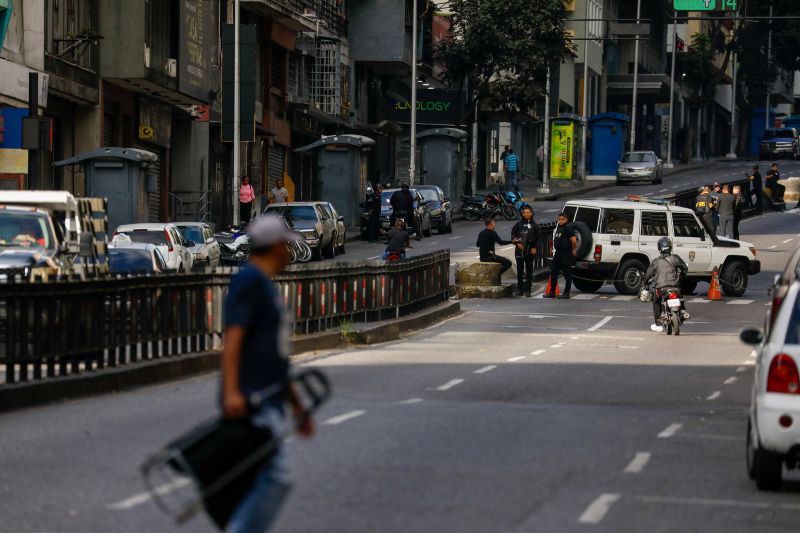
Berita reported over the weekend that the streets of Caracas and other cities have been quiet, with people only venturing out to for basic supplies in case the capital sees clashes or looting.
There have been little signs of the government-backed paramilitary groups known as colectivos on the streets, but long lines outside of supermarkets and pharmacies.
Opposition supporters are celebrating in private, and there have been no rallies supporting the US action.
State media in Venezuela has featured supporters of the regime with defiant messages for Trump.
Beritaâs Ali Main, Kit Maher, Kevin Liptak, Jennifer Hansler, Kristen Holmes, Tim Lister, Eric Bradner, and Catherine Nicholls contributed to this report.
South America Donald Trump Oil & gas See all topics Facebook Tweet Email Link Link Copied!
Follow